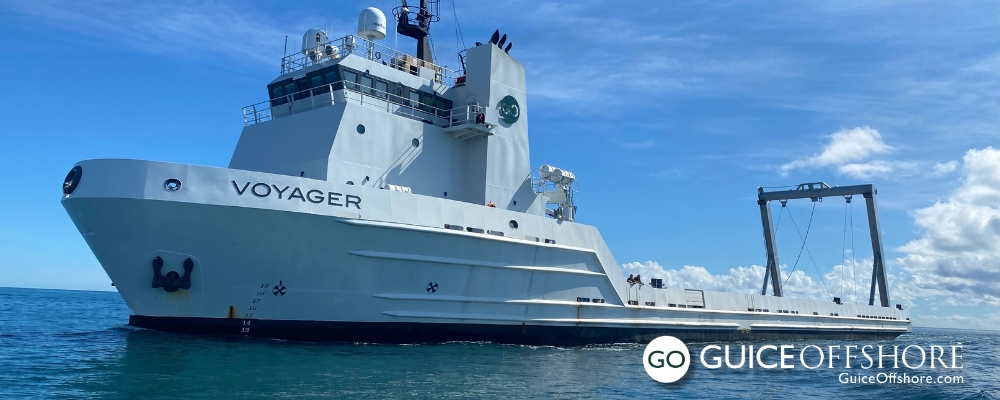
- Note: Because of severe weather, the ROV dives scheduled for Sept. 16–17 have been postponed. The team plans to resume dives and livestreams on Thursday, Sept. 18. The ship-to-shore hosted event (link below) on Wednesday will proceed as scheduled. For additional info, photos and updates, click HERE.
Hudson Canyon, the largest deep-sea canyon off the coast of New York and New Jersey, is a biological treasure trove teeming with marine life and now you can be among the first to explore its depths in real time.
The Hudson Canyon is a large, deep underwater canyon located about 100 miles southeast of New York City. It extends roughly 350 miles into the Atlantic Ocean, featuring steep walls, and is a habitat for a diverse range of marine life and a key area for fisheries. It is the largest submarine canyon along the U.S. Atlantic Coast, with depths reaching up to 3,500 meters (10,500 feet). Carved by glaciers during the last ice age, it has steep, V-shaped walls, with its deepest parts found at the base of the continental slope.
From Sept. 14 to 26, 2025, coral scientists, ecologists, and ocean explorers will embark on a two-week expedition to investigate the canyon’s rich and under-explored ecosystems. Using the remotely operated vehicle (ROV) Global Explorer, the team will capture high-definition video, collect physical samples, and gather environmental DNA to reveal the canyon’s diverse marine communities—from swordfish and bluefin tuna to summer flounder, deepwater octopus, corals, and even microorganisms.
Everyone is invited to join the mission virtually, with daily live-streamed ROV dives and four ship-to-shore interactions. Watch as scientists navigate through the canyon’s intricate habitats, and study the geology and oceanography that make Hudson Canyon an ecological hotspot.
“This cruise is a remarkable opportunity to get a firsthand look at the live-bottom habitats, especially deep-sea coral habitats in Hudson Canyon. Despite being the largest submarine canyon in the Northeast, supporting critical biodiversity in the region, its deep-sea habitats are underexplored, and our efforts will help enhance a top-to-bottom understanding of the canyon’s ecosystem,” said Dr. Meredith Everett, NOAA Fisheries chief scientist for the expedition.
NOAA’s Hudson Canyon research cruise also marks the 100th Anniversary of the Arcturus Oceanographic Expedition, which was one of the earliest scientific voyages to explore Hudson Canyon and its surrounding deep-sea environments, laying the groundwork for modern oceanography in the region. A unique aspect of the Arcturus expedition were the six artists on board who captured what the scientists observed during the mission from the depths of the sea.
NOAA is supporting the mission through research, science, exploration, outreach and education, and in a nod to the Arcturus expedition, a NOAA’s Office of National Marine Sanctuaries artist will be aboard the NOAA Ship Nancy Foster to document the research through different mediums: animation, videography, photography, and illustration.
The National Marine Sanctuary Foundation and the Wildlife Conservation Society (WCS) have been working to have the Hudson Canyon designated as a National Marine Sanctuary to protect its unique habitat and the wildlife within it.
Tune In: Ship-To-Shore Interactions
Special ship-to-shore livestreams (4 events only) guided by a host speaker will be on all platforms (YouTube, Facebook, Linkedin, Instagram).
Sept.17, from 12 to 12:45 p.m. EDT
From Dock to Deep: The Start of Our Expedition – Tune in to learn about the Hudson Canyon expedition, meet the crew, tour the vessel, and see how we’re getting ready to explore the deep!
Sept. 19, from 12 to 12:45 p.m. EDT
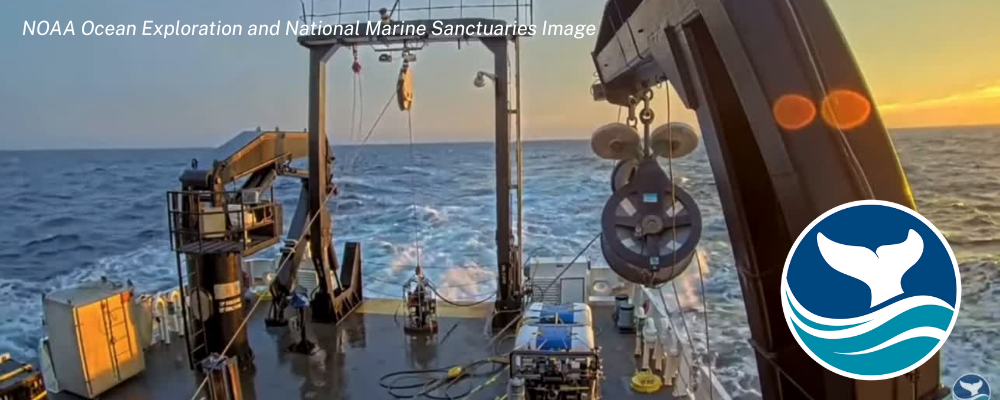
Deep-Sea Science: ROV Operations – Tune in to see how the ROV is deployed and operated, learn how we collect coral and sediment samples, and hear directly from the scientists behind the mission.
Sept. 23, from 12 to 12:45 p.m. EDT
A Century of Discovery: Artists, and the Legacy of the Arcturus Expedition – Join us as we mark the anniversary of a historic expedition, and explore the stories of the people who were aboard Arcturus. Featuring insights from artist Anita Glesta and Wildlife Conservation Society’s archivist Madeline Thompson.
Sept. 25, from 12 to 12:45 p.m. EDT
Deep Sea Discoveries: Closing the Expedition – Expedition highlights will be shared, including collected dive footage and stories from the science party.
Check back as dates and times are subject to change depending on weather conditions.
Tune In: Daily Remotely Operated Vehicle Dives in Hudson Canyon
Live streams of the ROV footage from each dive are expected to begin around 8:00 a.m. EDT daily (excluding weekends), weather and operational conditions permitting. We recommend checking the stream page at 8:00 a.m., and if the dive hasn’t started yet, feel free to check back shortly — we’ll go live as conditions allow!
- Sept. 15, from 8 to 5:30 p.m. EDT
- Sept. 16, from 8 to 5:30 p.m. EDT
- Sept. 17, from 8 to 5:30 p.m. EDT
- Sept. 18, from 8 to 5:30 p.m. EDT
- Sept. 19, from 8 to 5:30 p.m. EDT
- Sept. 22, from 8 to 5:30 p.m. EDT
- Sept. 23, from 8 to 5:30 p.m. EDT
- Sept. 24, from 8 to 5:30 p.m. EDT
Where to Watch:
Daily ROV Livestreams are available only on the NOAA Sanctuaries Youtube Page [Tip: You can turn notifications on for each live stream event]
Ship-to-Shore Livestreams (4 events only) will be on all platforms:
Youtube: NOAA Sanctuaries Youtube Page
Facebook: NOAA Sanctuaries Facebook Page
Facebook: NOAA Nancy Foster Facebook Page
LinkedIn: NOAA’s Office of National Marine Sanctuaries LinkedIn Page
Instagram: @noaasanctuaries
Why: Data collected during this mission, including high-definition video, imagery, physical coral and sediment samples, environmental DNA, and oceanographic measurements, will help researchers characterize the biodiversity of Hudson Canyon.
Exploring New Reefs with Drop Cameras: Hidden Oases off Georgia’s Coast
Read HERE about how scientists at Gray’s Reef National Marine Sanctuary are using non-invasive drop camera technology to explore hidden reef habitats off Georgia’s coast. This innovative tool provides valuable scientific data on seafloor ecosystems and marine life while also sharing beautiful live ocean views with the public—revealing vibrant communities beneath the waves.