New guidance will help governments evaluate marine geoengineering research proposals to ensure they are safe for the environment.
The International Maritime Organization (IMO) has adopted new guidance aimed at ensuring marine geoengineering research avoids unacceptable impacts, amid growing interest in climate change mitigation technologies.
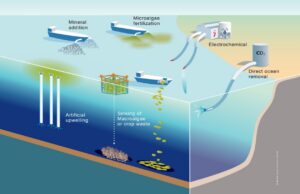
Marine geoengineering involves methods to increase the ocean’s capacity to absorb carbon dioxide from the atmosphere or store carbon for long periods. Attempts to manipulate the ocean to counteract the effects of climate change involve removing carbon dioxide from the atmosphere through deliberate ocean‐based interventions ranging from stimulating plankton blooms and enhancing alkalinity, to brightening clouds to make them more reflective, designed to remove CO₂. However, the potential impacts of these activities on marine ecosystems are not yet fully understood.
Meeting at IMO Headquarters in London, Parties to the 1972 Convention on the Prevention of Marine Pollution by Dumping of Wastes and Other Matter (London Convention) and 1996 Protocol to the Convention (London Protocol), adopted a resolution establishing assessment frameworks for ocean fertilization, ocean alkalinity enhancement and ocean sinking biomass.
The frameworks will help governments determine on a case-by-case basis whether proposed activities constitute legitimate scientific research and whether they can proceed without unacceptable risks to the marine environment.
Welcoming the achievement, IMO Secretary-General Mr. Arsenio Dominguez said:
“At a time when marine geoengineering is attracting increasing scientific, commercial and public attention, they provide regulators and researchers with rigorous and transparent tools for assessing proposed activities and protecting the marine environment.”
A precautionary approach to marine geoengineering
The frameworks provide a common structure for a precautionary approach for the following three marine geoengineering methods:
- Ocean fertilization: Stimulating primary productivity in the ocean by adding nutrients to seawater to encourage phytoplankton growth, which absorbs carbon dioxide from the atmosphere;
- Ocean alkalinity enhancement: Adding alkaline substances to seawater to increase the ocean’s capacity to absorb atmospheric carbon dioxide and counteract ocean acidification.
- Ocean sinking of biomass: Deliberately placing biological material, such as marine or terrestrial plant matter, into the ocean to store carbon.
Each framework covers initial screening, environmental assessment, risk management, decision-making and post-project review. Assessments can be revisited as new information becomes available.
Under the frameworks, all proposals must demonstrate a legitimate scientific purpose, thoroughly assess environmental risks, ensure proper stakeholder consultation and peer review, and include rigorous monitoring and transparent reporting.
The Parties emphasized that scientific knowledge remains limited, and that research should proceed cautiously, with environmental protection as the top priority. Further scientific research is needed before any activities beyond the research stage can be considered.
The IMO explained that the adoption of these frameworks reaffirms the essential role of the London Convention and London Protocol in responding to new and rapidly evolving human activities in the ocean.
United Nations Marine GeoEngineering Advisory Report
In 2019, the GESAMP – Working Group 41 (Group of Experts on the Scientific Aspects of Marine Environmental Protection), an advisory body that provides independent, interdisciplinary scientific advice to the United Nations (UN) system on marine environmental protection, published its High Level Review of a Wide Range of Proposed Marine Geoengineering Techniques report, providing a high-level review of 27 proposed marine geoengineering techniques.
Most fall under carbon dioxide removal (CDR) strategies, while others address indirect effects like hurricane weakening or harnessing ocean thermal energy conversion (OTEC). The report assesses methane capture and destruction methods for their potential in meeting climate targets. The report called for the rapid development of international governance and risk-assessment frameworks, reflecting the London Protocol’s precautionary approach.
The report emphasizes that robust international cooperation and comprehensive scientific research are essential: each technique must undergo a holistic risk–benefit assessment to understand its ecological and social impacts before any large-scale deployment.
GESAMP WG 41 is currently developing an Integrated Assessment Framework, which is expected to be essential in promoting a transition towards a more holistic assessment that includes social, political, economic, ecological, ethical and other societal dimensions.